Bloodwork Panel Explained: Annual Physical Labs
By Dr. Naaz Aziz, MD, Board-Certified Family Medicine Physician · Zorah Express Medical Care, Des Plaines, IL · Updated September 2026
Zorah Express Medical Care — physician-supervised primary care and preventive medicine — 1645 S River Road, Suite 14, Des Plaines, IL 60018, River Plaza Professional Building. Open Monday through Saturday from nine until five. (708) 412-4040 · book an annual physical online.
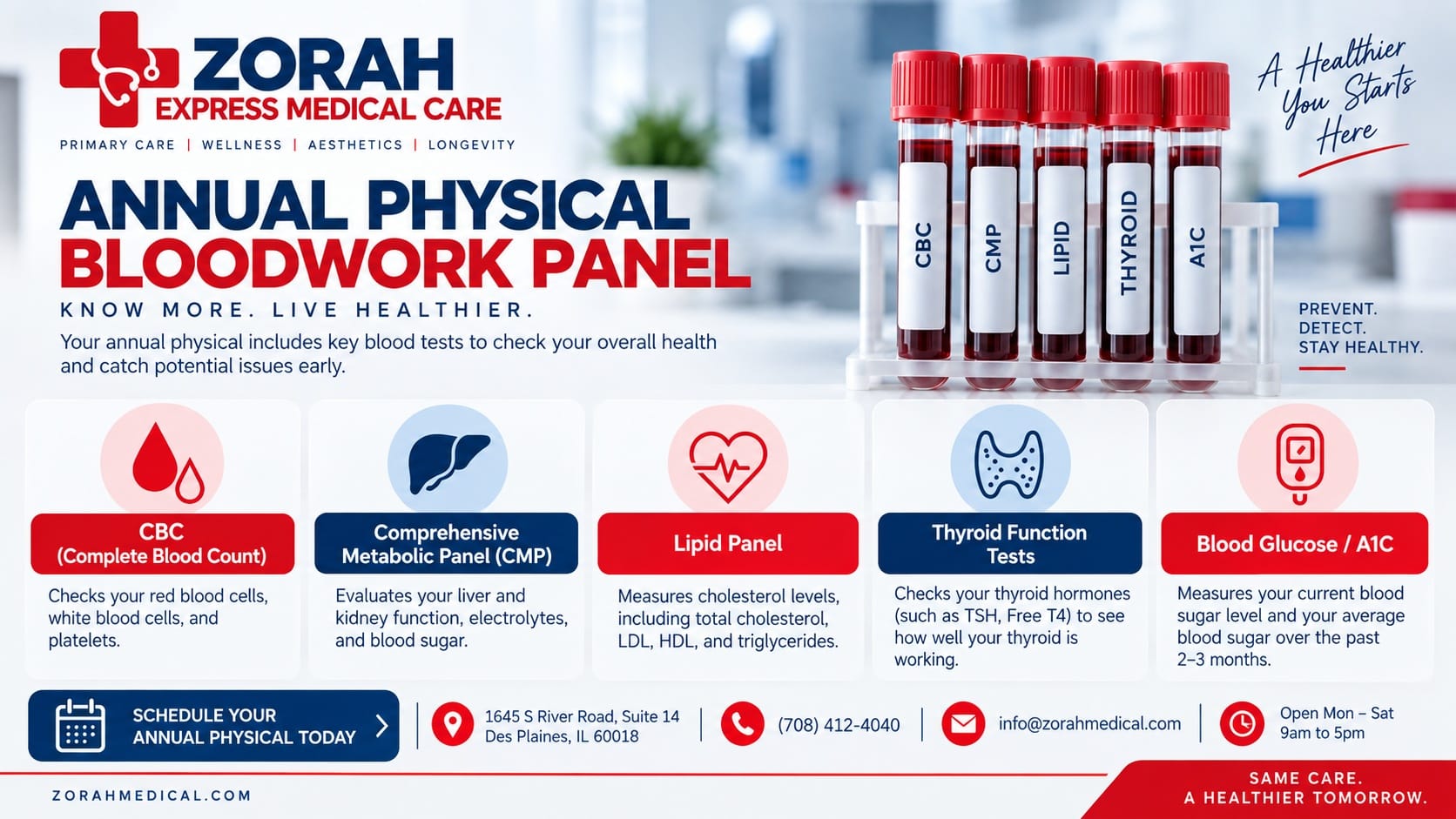
Quick answer: the standard bloodwork drawn at an annual physical covers roughly five things — blood sugar, cholesterol, kidney and liver function, blood counts, and thyroid — and each one exists to catch a problem years before it becomes a symptom. Most patients get the results back, see a page of numbers with “normal” or “high” next to them, and never learn what any of it actually means. Here’s the panel explained the way I walk patients through it in the room.
Why a Physical Includes Bloodwork at All
A physical exam tells me what your body is doing right now — your weight, your blood pressure, your heart and lungs on exam. Bloodwork tells me what your body has been doing for months, sometimes years, before you’d ever feel it. Prediabetes, early kidney decline, a thyroid slowing down, cholesterol climbing — none of these cause symptoms until they’re advanced. That’s the entire argument for preventative care: catching the number before it becomes the diagnosis.
Fasting Glucose and A1C: Your Blood Sugar Story
Fasting glucose is a single snapshot — your blood sugar the morning of the draw, after roughly eight hours without food. A1C is the more useful number: it reflects your average blood sugar over the past two to three months, because it measures how much sugar has attached to your red blood cells over their lifespan.
A fasting glucose under 100 mg/dL and an A1C under 5.7% is normal. A1C between 5.7% and 6.4% is prediabetes — the most common diagnosis I make that patients didn’t know was coming. Above 6.5% on two occasions is type 2 diabetes. If your numbers land in either of the higher ranges, this is where diabetes treatment starts — sometimes with medication, often first with the specific dietary and activity changes that actually move an A1C, tracked at follow-up rather than guessed at.
The Lipid Panel: Cholesterol and Triglycerides
This one gets misunderstood constantly. Total cholesterol alone isn’t the number that matters — it’s the breakdown. LDL (“bad” cholesterol) is what builds plaque in arteries; HDL (“good” cholesterol) helps clear it; triglycerides are a separate fat particle tied closely to diet, alcohol, and blood sugar control.
General targets: LDL under 100 mg/dL, HDL above 40 (men) or 50 (women), triglycerides under 150. But targets shift based on your other risk factors — a 55-year-old with a family history of heart disease and an LDL of 110 gets a different conversation than a healthy 30-year-old with the same number. This is exactly the kind of result that belongs in chronic disease management if it needs ongoing tracking rather than a one-time mention at your physical.
Kidney Function: BUN and Creatinine
These two markers, plus a calculated number called eGFR (estimated glomerular filtration rate), show how well your kidneys are filtering waste from your blood. Kidney decline is almost silent — patients feel completely normal until function has dropped significantly, which is exactly why it’s checked every year rather than only when something feels wrong. Elevated creatinine or a falling eGFR over consecutive years, even within “normal” ranges, is often the earliest sign we act on.
Liver Function: ALT, AST, and Beyond
Liver enzymes (ALT and AST) rise when liver cells are inflamed or under stress — from alcohol, certain medications, viral hepatitis, or increasingly, fatty liver disease unrelated to alcohol at all. Fatty liver disease is now one of the most common abnormal findings I see on routine labs, often in patients with no symptoms and no idea it’s there. Mildly elevated liver enzymes aren’t usually an emergency, but they’re a signal worth acting on before they climb further.
Complete Blood Count (CBC): The Full Picture
Your CBC counts red blood cells, white blood cells, and platelets. Low red blood cells or hemoglobin points to anemia — common, often from iron or B12 deficiency, and very treatable once identified. An elevated white blood cell count can signal infection or inflammation somewhere in the body. Platelet counts outside normal range affect how your blood clots. This is the panel that often explains fatigue patients have been living with for months without a clear cause.
Thyroid: TSH
TSH (thyroid-stimulating hormone) is the single best screening number for thyroid function. A high TSH usually means an underactive thyroid (hypothyroidism) — fatigue, weight gain, cold intolerance, hair thinning; a low TSH points toward an overactive thyroid (hyperthyroidism) — anxiety, weight loss, rapid heartbeat. Thyroid disorders are common, frequently missed because the symptoms get blamed on stress or aging, and simple to manage once caught.
Vitamin D and B12
Not always included by default, but worth requesting, especially in Illinois winters. Both run low far more often than patients expect, and both cause fatigue, mood changes, and in B12’s case, nerve symptoms if left unaddressed long enough.
What Happens After the Results Come In
A number outside normal range isn’t an automatic prescription — it’s the start of a conversation. At Zorah, results are reviewed at a follow-up visit, not left on a portal for you to interpret alone. If a result needs action, we build the plan in the same visit rather than referring you elsewhere: blood sugar into diabetes treatment, ongoing conditions into chronic disease management, and anything that’s simply worth watching gets folded into next year’s preventative care plan.
Frequently Asked Questions
Do I need to fast before my annual physical bloodwork? Yes, for the most accurate glucose and lipid panel — typically 8-12 hours with water only. We’ll confirm timing when you schedule.
How often should this panel be repeated? Annually for most adults, more often if a prior result was abnormal or you’re managing a chronic condition.
What if one number comes back high? One abnormal value rarely means a diagnosis on its own — it’s evaluated alongside your history, symptoms, and sometimes a repeat test before any plan is made.
Can I see my results the same day? Most labs return within a few business days; we schedule a follow-up to review them together rather than sending a report with no context.
Does insurance cover annual physical bloodwork? Most plans cover an annual preventive panel in full. We verify this before your visit.
Book Your Annual Physical in Des Plaines
The bloodwork is only useful if someone reads it in context with your history and follows up on what it finds. Schedule an annual physical with Dr. Aziz or call (708) 412-4040. Saturday appointments are available.
Zorah Express Medical Care · 1645 S River Road, Suite 14, Des Plaines, IL 60018 · (708) 412-4040 · Monday–Saturday, 9 AM–5 PM
Lab reference ranges vary slightly by laboratory and individual health history. Nothing here replaces an in-person evaluation; interpretation of your results and any treatment plan is made by a licensed physician who has reviewed your full history.