Is Peptide Therapy Safe? What a Physician Checks Before Prescribing
By Dr. Naaz Aziz, MD, Board-Certified Family Medicine Physician · Zorah Express Medical Care, Des Plaines, IL · Updated September 2026
Zorah Express Medical Care — physician-supervised peptide therapy and GLP-1 care — 1645 S River Road, Suite 14, Des Plaines, IL 60018, River Plaza Professional Building. Open Monday through Saturday from nine until five. (708) 412-4040 · book a peptide therapy consultation online.
Quick answer: peptide therapy can be safe and effective when it’s prescribed by a physician who reviews your history, orders labs, sources the peptide from a reputable pharmacy, and follows up to monitor how you respond. It becomes risky the same way any medication becomes risky — skipped screening, unknown sourcing, and no one checking on you after the first dose. Here’s exactly what I check before writing a prescription, and what separates a safe peptide program from a risky one.
What Peptide Therapy Actually Is
Peptides are short chains of amino acids that occur naturally in the body and act as signaling molecules — telling cells to grow, repair, release a hormone, or reduce inflammation. Therapeutic peptides are synthetic versions of these signals, used to support things like tissue repair, growth hormone release, or metabolic function. GLP-1 medications like semaglutide and tirzepatide are technically peptides too, though they’ve become their own category because of how widely they’re used for weight loss and diabetes. Our peptide therapy and GLP-1 program covers both the broader category and the specific weight-loss peptides most patients ask about.
Why “Natural” Doesn’t Mean “No Screening Needed”
The most common misconception I hear is that because peptides are naturally occurring in the body, they’re automatically low-risk. That’s not how any hormone or signaling molecule works — dose, purity, and the patient’s own health history all matter. A peptide that’s safe for one patient can be the wrong choice for another, which is exactly why I don’t prescribe anything without a visit first.
What I Check Before Writing Any Peptide Prescription
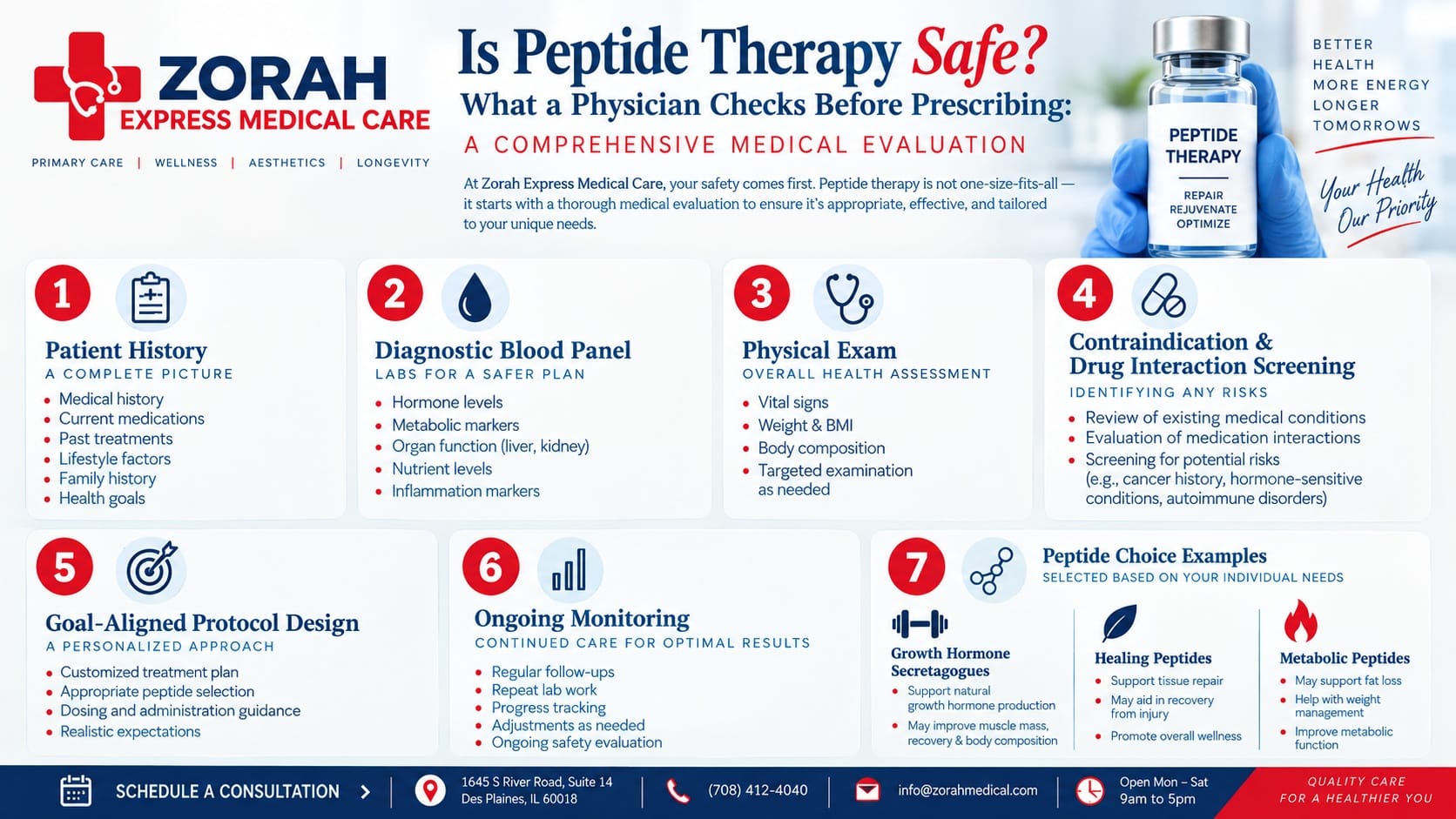
Your full medical history. Current medications, prior surgeries, chronic conditions, and family history all factor into whether a specific peptide is appropriate. Some peptides interact with existing medications or are contraindicated in patients with certain conditions.
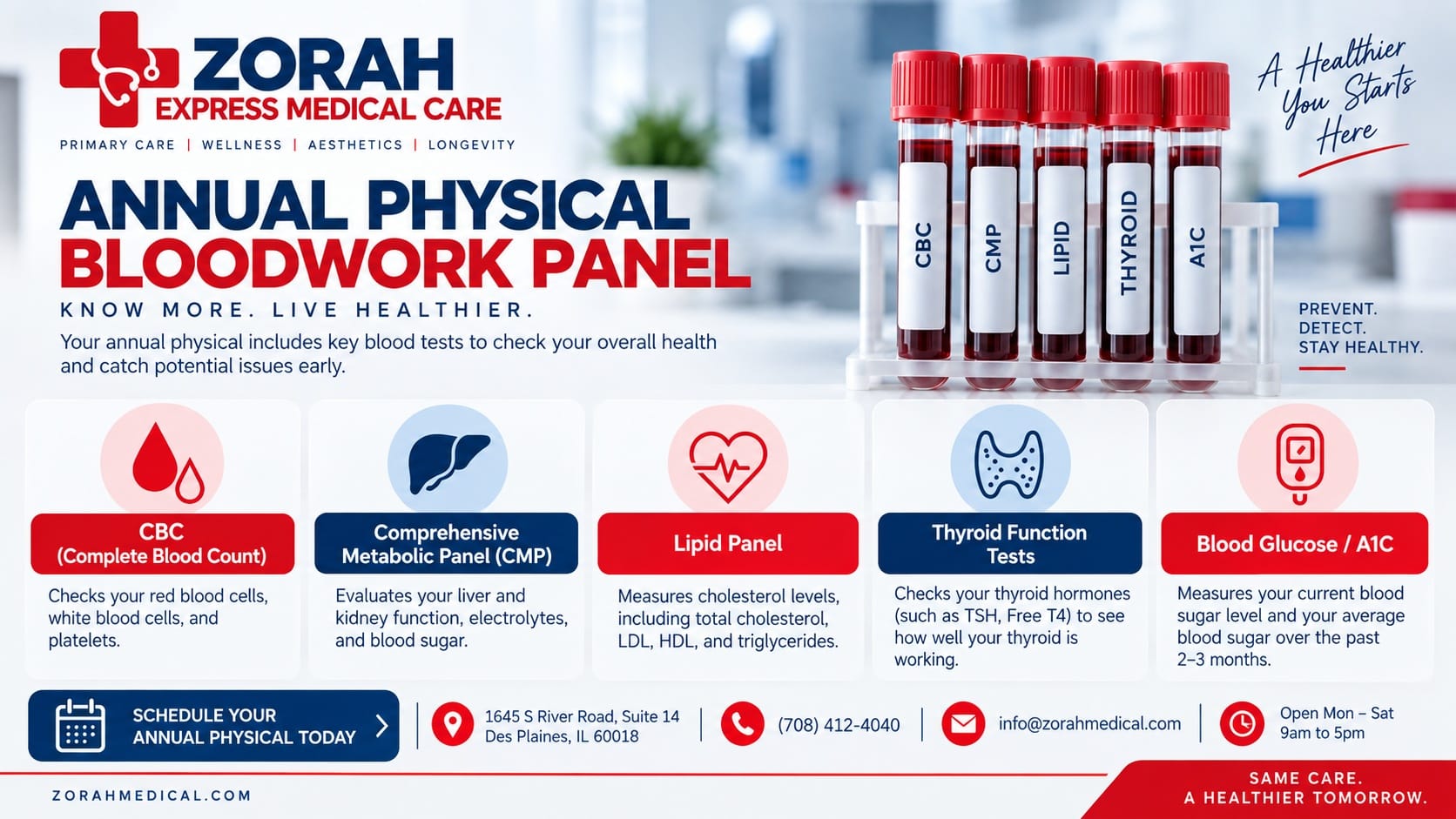
Baseline labs. Depending on the peptide, this can include kidney and liver function, blood sugar, hormone levels, or thyroid function — the same category of workup used before starting GLP-1 medications, because the goal is the same: know where you’re starting from before anything changes it.
Why you want it. Peptide therapy isn’t one-size-fits-all — the right choice depends on the goal, whether that’s metabolic support, recovery, or something tied to an existing chronic condition. A peptide chosen for the wrong goal is a peptide that won’t work, regardless of how safely it’s sourced.
Contraindications specific to that peptide. Certain peptides are avoided in pregnancy, active cancer, or with specific hormone-sensitive conditions. This is reviewed peptide by peptide, not as a blanket checklist.
The Sourcing Question Nobody Wants to Ask
This is the part that actually determines most of the real-world risk. Peptides sold online without a prescription are frequently mislabeled, underdosed, overdosed, or contaminated — there’s no regulatory body checking what’s actually in the vial. A legitimate compounding pharmacy, by contrast, is licensed, inspected, and accountable for what it produces. At Zorah, I’ll tell you exactly which pharmacy sources your peptide and why it’s one I trust. If a provider won’t answer that question directly, that’s the answer.
What Monitoring Looks Like Once You Start
Peptide therapy isn’t a one-time prescription — it’s a program with checkpoints. That typically means a follow-up visit within the first month to assess how you’re responding, adjust dosing if needed, and repeat relevant labs on a schedule that makes sense for the specific peptide and goal. A program with no follow-up built in isn’t monitoring anything; it’s just refilling a prescription.
Who Should Be Cautious or Avoid Peptide Therapy
Pregnancy and breastfeeding rule out most peptide therapies. Active cancer, certain autoimmune conditions, and some hormone-sensitive conditions require extra caution or a different approach entirely. Anyone already managing a complex chronic condition through chronic disease management needs peptide therapy coordinated with that existing plan, not layered on separately without either provider knowing about the other.
Frequently Asked Questions
Is peptide therapy FDA-approved? Some peptides, including certain GLP-1 medications, have FDA-approved brand versions. Many other peptides are available only through compounding pharmacies and are not FDA-approved as standalone products — which makes the pharmacy’s quality and accreditation the deciding safety factor.
Do I need bloodwork before starting? Yes. Baseline labs depend on the specific peptide and your health history, and are reviewed before any prescription is written.
How is peptide therapy different from GLP-1 weight loss treatment? GLP-1s are a specific category of peptide used for weight and blood sugar management. Peptide therapy more broadly includes other peptides used for recovery, metabolic support, and other goals — the screening process is similar, but the specific peptide and monitoring plan differ.
How often will I need follow-up visits? Typically within the first month of starting, then on a schedule based on your response and the specific peptide, similar to how any long-term medication is monitored.
Can I bring in a peptide I found online and ask you to monitor it? I can only prescribe and monitor peptides I’ve sourced and can verify the origin of. If you’re already taking something obtained elsewhere, bring it to your visit so we can discuss it honestly.
Start With an Evaluation, Not a Vial
Peptide therapy can genuinely help the right patient for the right reason — but the medication is only as safe as the process around it. Schedule a peptide therapy consultation with Dr. Aziz or call (708) 412-4040. Saturday appointments are available.
Zorah Express Medical Care · 1645 S River Road, Suite 14, Des Plaines, IL 60018 · (708) 412-4040 · Monday–Saturday, 9 AM–5 PM
Peptide therapy carries risks and contraindications that vary by patient and by specific peptide. Nothing here replaces an in-person evaluation; the decision to prescribe belongs to a licensed physician who has examined you and reviewed your history and labs.