
Prediabetes: The Diagnosis Most Patients Miss Until It’s Too Late
What the Numbers Actually Mean, Who’s at Risk, and Why the Window to Reverse It Closes Quietly — A Guide for Des Plaines, Park Ridge, Niles, and the Northwest Suburbs
By Kabirat A. · Zorah Express Medical Care, Des Plaines, IL · Updated September 2026
Zorah Express Medical Care — diabetes treatment and management — 1645 S River Road, Suite 14, Des Plaines, IL 60018, River Plaza Professional Building, off River Road near the Rosemont border. Open Monday through Saturday from nine until five. (708) 412-4040 · book a diabetes screening online.
Quick answer: Prediabetes has no symptoms for most people, which is exactly why it’s one of the most commonly missed diagnoses we see. It only shows up on bloodwork — usually the kind drawn during a routine annual physical — and by the time symptoms do appear, it’s often because the condition has already progressed to type 2 diabetes. The good news: prediabetes is also one of the most reversible diagnoses out there, if it’s caught early.
Why Prediabetes Goes Unnoticed
Prediabetes means your blood sugar is higher than normal, but not yet high enough to be classified as diabetes. The problem is that “higher than normal” doesn’t come with a feeling attached. You don’t get a headache when your A1C climbs from 5.5% to 6.0%. There’s no moment where your body taps you on the shoulder. The only way to catch it is a blood test — which is why so many patients in Des Plaines, Park Ridge, and Niles find out by accident, during labs ordered for something else entirely.
The Numbers That Define It
Two lab values tell the story:
Fasting glucose: Normal is under 100 mg/dL. Prediabetes falls between 100–125 mg/dL. Diabetes is diagnosed at 126 mg/dL or higher, usually confirmed on a second test.
A1C: This measures your average blood sugar over roughly the past two to three months. Normal is under 5.7%. Prediabetes is 5.7%–6.4%. Diabetes is 6.5% or above.
If your labs land in either prediabetes range, that’s not a number to file away and forget — it’s a signal that’s still early enough to act on.
Who’s at Higher Risk
A few things raise the odds significantly: carrying extra weight, especially around the midsection; a family history of type 2 diabetes; being over 45; having had gestational diabetes during a pregnancy; or a largely sedentary routine. None of these guarantee prediabetes, and plenty of people without any of these risk factors still get diagnosed — which is part of why routine screening matters more than trying to guess who’s at risk. [FILL IN: if you want a line here on how many patients you screen who have zero risk factors, or a local stat, it strengthens this section]
Why “Not Diabetes Yet” Doesn’t Mean “Nothing to Worry About”
Here’s the part that surprises people: prediabetes isn’t a waiting room before diabetes — it’s an active window where the outcome is still very much undecided. Left unaddressed, a meaningful number of people with prediabetes go on to develop type 2 diabetes within several years. But that same window is where lifestyle changes have the most leverage. Weight loss, even modest amounts, along with regular activity and dietary changes, can bring blood sugar back into a normal range for many people — sometimes without needing medication at all.
What Happens After a Prediabetes Diagnosis
This isn’t a diagnosis handed to you with no plan attached. At a follow-up visit, we typically talk through:
- Diet and activity changes that actually move an A1C, not vague general advice
- A recheck timeline — usually repeating labs in a few months to see if the changes are working
- Other numbers worth watching, like blood pressure and cholesterol, since these often travel together and fall under cardiovascular health
- Whether medication makes sense, which isn’t automatic for prediabetes but is sometimes appropriate depending on your full picture
If things progress further, that’s where our diabetes treatment program comes in — but the goal with prediabetes is almost always to prevent that step, not prepare for it. For patients already managing another ongoing condition, prediabetes is usually folded into the same chronic disease management plan rather than treated as a separate issue.
Why This Belongs in Your Annual Physical
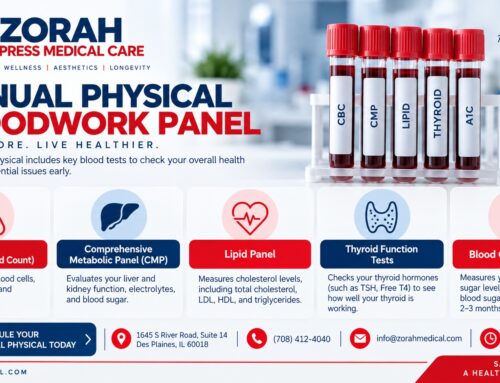
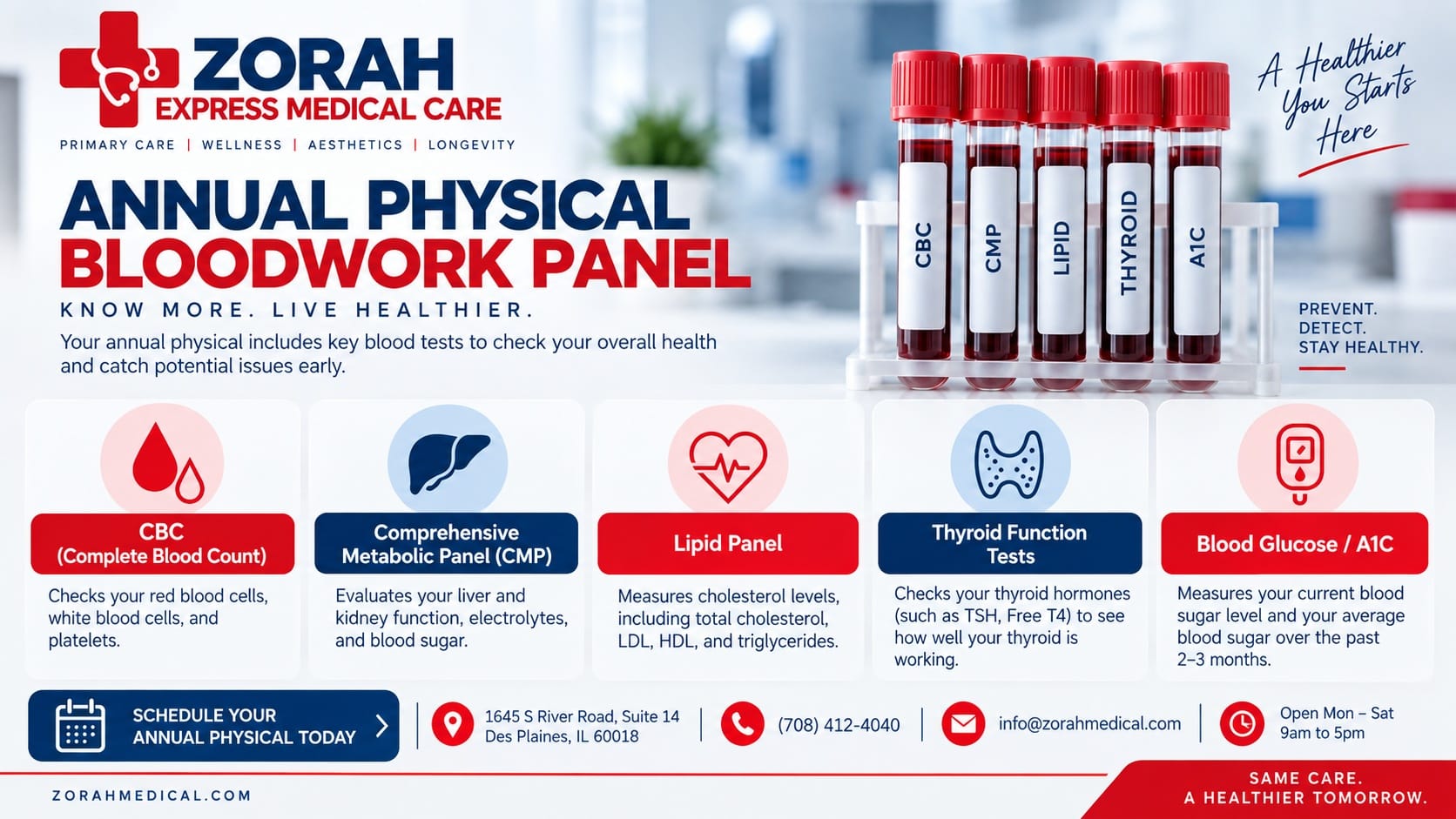
Prediabetes is exactly the kind of thing routine bloodwork exists to catch. It’s part of why we build fasting glucose and A1C into standard annual physical labs rather than only testing when someone already has symptoms or a specific concern. And because prediabetes so often travels with other early, silent conditions, it’s a natural fit within a broader preventative care plan rather than a one-off test.
Why Des Plaines and the Northwest Suburbs Screen for Prediabetes at Zorah
Because catching a number early only matters if someone follows up on it — and at Zorah, the same clinical team that reviews your labs also builds the plan with you, rather than handing you a printout and a referral. We’re open six days a week, take walk-ins, and see patients from Des Plaines, Park Ridge, Niles, Rosemont, and Mount Prospect without requiring a referral. You can read more about the practice on our about page. [FILL IN: reviews/testimonials page link, if available]
Frequently Asked Questions
Can prediabetes be reversed?
For many people, yes — weight loss, increased activity, and dietary changes can bring blood sugar back into a normal range, especially when caught early.
Do I need to fast before a blood sugar test?
Yes, fasting glucose and A1C are typically most accurate after 8–12 hours without food, water only.
How often should I be screened if I have risk factors?
Annually is standard for most adults; your care team may recommend more frequent checks depending on your history and results.
Does prediabetes always turn into type 2 diabetes?
No. It’s a significantly elevated risk, not a certainty — and it’s the stage where changes have the most impact on the outcome.
Are there symptoms I should watch for?
Usually not with prediabetes itself. Symptoms like increased thirst, frequent urination, or fatigue tend to show up later, once blood sugar is more significantly elevated — which is why screening matters more than waiting for symptoms.
Where are you, and how do I book?
1645 S River Road, Suite 14, Des Plaines, six days a week from 9 until 5. Book online or call; no referral needed.
Don’t Wait for a Symptom That Might Not Come
Prediabetes is one of the easiest diagnoses to miss and one of the most worth catching early. If it’s been a while since your last physical, or you’re not sure when your blood sugar was last checked, call (708) 412-4040 or book online.
Zorah Express Medical Care · 1645 S River Road, Suite 14, Des Plaines, IL 60018 · (708) 412-4040 · Monday–Saturday, 9 AM–5 PM
Blood sugar results and risk factors vary by individual. This information is for general education and doesn’t replace an in-person evaluation of your labs and health history by a licensed physician.